
How Water Damage Spreads Through a Home
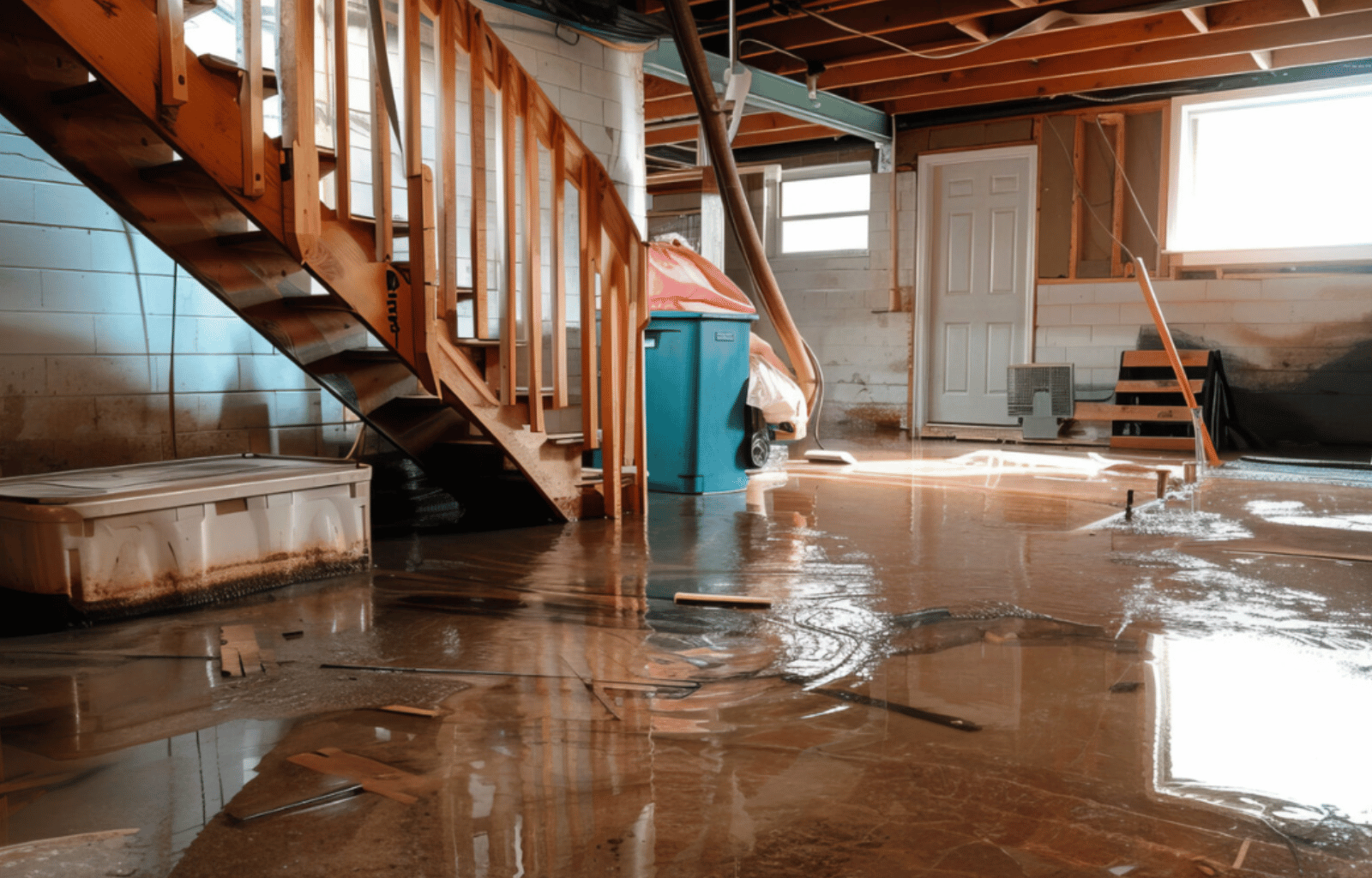
Water damage in a Scottsdale, AZ home spreads with alarming speed. Within minutes, water saturates flooring and begins wicking into drywall. Within hours, structural wood begins to swell, cabinetry warps, and moisture invades wall cavities. After 24 hours, mold risk becomes significant. After 48 to 72 hours without professional drying, secondary damage — warped framing, delaminated subfloor, and mold colonization — escalates costs dramatically. In Scottsdale's warm climate, this timeline is compressed compared to cooler regions because warmth accelerates both moisture migration and microbial growth.
Key Takeaways
- Water can spread into wall cavities and under flooring within minutes of a significant leak.
- Drywall begins to soften and lose structural integrity within 1 to 2 hours.
- Hardwood and engineered wood floors begin to warp within hours of saturation.
- Mold risk elevates significantly after 24 to 48 hours without professional drying.
- Scottsdale's heat and low desert humidity create a deceptive environment — surfaces may feel dry while hidden moisture persists inside walls.
- Professional moisture mapping is the only reliable way to find all affected areas.
Table of Contents
- The Water Damage Timeline: Minute by Minute
- Which Materials Are Affected First?
- Why Scottsdale's Climate Matters
- The Hidden Spread: Inside Walls and Floors
- What To Do Next
- When To Call a Professional
- FAQ
The Water Damage Timeline: Minute by Minute
Understanding exactly what happens — and when — helps Scottsdale homeowners grasp why every hour matters.
Within Minutes (0–60 Minutes)
Water moves immediately and seeks the path of least resistance. From the point of origin, it spreads outward across hard floors and down through carpet pads. It enters any gap, seam, or crack: the gap between flooring and baseboards, the seam at cabinet toe kicks, the space beneath appliances. Drywall begins absorbing moisture from contact within the first 10 to 15 minutes. Subfloor materials begin to saturate.
Within Hours (1–24 Hours)
Drywall has now absorbed significant moisture and begun to soften. The paper face of drywall provides the ideal surface for mold spore germination once relative humidity in the wall cavity rises. Wood framing begins to swell. If hardwood flooring is present, cupping and buckling begin. Insulation inside wall cavities traps moisture, creating a humid environment that persists long after surface water is removed. Furniture legs, cabinet bases, and trim pieces begin to stain and swell.
24–48 Hours
At this point, the CDC guidance states clearly that if a home cannot be dried within 24 to 48 hours after flooding or water damage, homeowners should assume mold growth may be present. Porous materials — drywall, insulation, carpet, upholstered furniture — that have not been extracted and dried are now high-risk for active mold colonization. Structural wood may show signs of swelling, delamination, or softening. Odors from bacteria and early mold growth may become noticeable.
48–72 Hours and Beyond
After 72 hours without professional intervention, the scope of damage expands significantly. Mold colonies establish and begin producing spores. Subfloor materials may require full replacement rather than drying. Metal fasteners and wall ties begin to corrode. In slab foundation homes common in Scottsdale, moisture trapped in the concrete slab itself may take weeks to dry without targeted equipment. Remediation costs increase substantially, and the project scope shifts from mitigation to full water damage restoration.
Which Materials Are Affected First?
| Material | Time to Visible Damage | Time to Structural Damage |
|---|---|---|
| Carpet and pad | Minutes | 24–48 hours (pad retains moisture) |
| Drywall | 1–2 hours (surface softening) | 24–48 hours (structural degradation) |
| Hardwood flooring | 2–6 hours (cupping begins) | 24–48 hours (permanent warping) |
| Engineered wood | 4–8 hours | 24–48 hours |
| Wood framing/studs | 12–24 hours | 48–72 hours |
| Subfloor (OSB/plywood) | 4–12 hours | 24–48 hours |
| Insulation | Immediate saturation | Loss of R-value within hours |
| Concrete slab | Hours (slow absorption) | Weeks without drying equipment |
Why Scottsdale's Climate Matters
Scottsdale's desert climate creates a paradox in water damage assessment. Homeowners often assume low desert humidity means things will dry out on their own. This is not accurate.
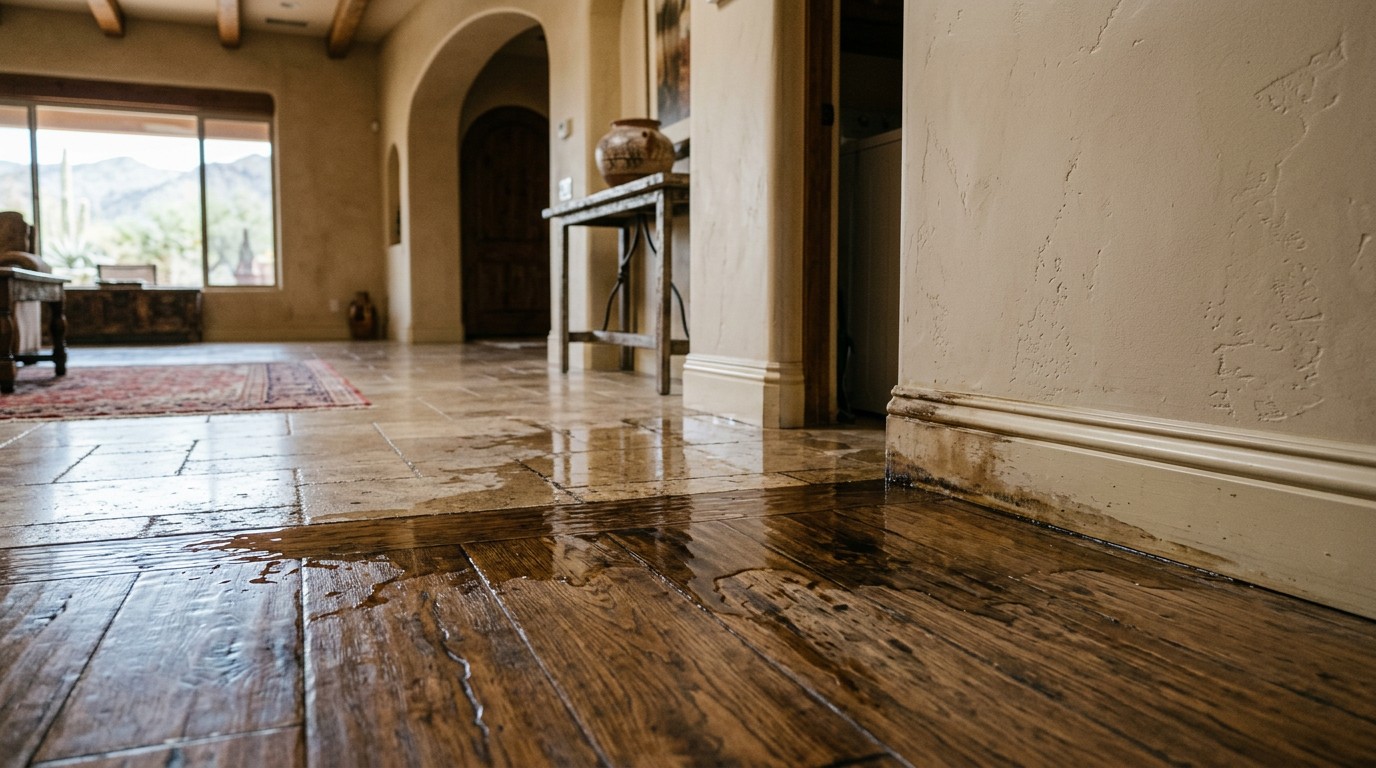
Low ambient humidity accelerates surface evaporation — surfaces and floors may feel dry to the touch within hours. But that moisture has not disappeared. It has migrated inward, into wall cavities, subfloor layers, and structural framing where ambient air cannot reach it without mechanical drying systems.
High temperatures accelerate mold germination. Mold thrives in warm, moist environments. In a Scottsdale home where interior temperatures rise during summer, moisture trapped in a wall cavity creates exactly those conditions. This is why mold can begin growing faster in a Scottsdale home than in a cooler climate, even with the low outdoor humidity.
Monsoon storms create rapid, large-volume intrusion. During Arizona's monsoon season (June 15–September 30), storms can deliver inches of rain in under an hour. For Scottsdale homes with flat or low-slope roofs — common on luxury custom builds — this volume overwhelms drainage in minutes. Storm flood water removal services are in high demand during this period.
The Hidden Spread: Inside Walls and Floors
Surface water is only part of the story. The more dangerous spread is the moisture you cannot see.
Water that reaches a wall cavity travels downward behind the drywall, saturating insulation and wicking into wall plates and studs. It can travel laterally through wall framing for 8 to 10 feet from the source before ever appearing on a surface. This means a kitchen sink leak may create moisture in the wall behind the refrigerator, or a bathroom leak may affect the closet on the other side of the shared wall.
Thermal imaging using infrared cameras is the standard tool for identifying this hidden spread. Temperature differentials between wet and dry materials appear clearly on a thermal image, allowing technicians to map the full extent of damage without unnecessary demolition.
For full details on how professionals identify and address hidden damage, see What Are the Signs of Hidden Water Damage in Scottsdale, AZ Homes?.
What To Do Next
If water damage has occurred in your Scottsdale home:
- Stop the water source immediately.
- Do not wait to see if it dries on its own — it will not fully dry without professional equipment.
- Call a water damage restoration company immediately for emergency extraction.
- Do not run standard household fans over wet areas — they can move moisture deeper into structure.
- Document all visible damage with photos and video before any cleanup.
For a full step-by-step guide, see What Should I Do Immediately After Water Damage in Scottsdale, AZ?.
When To Call a Professional
Call immediately if:
- The water source was anything other than clean tap water (sewage, stormwater, groundwater).
- Water has been present for more than a few hours.
- Water is in walls, under flooring, or in a ceiling.
- You can smell any musty or earthy odor — this may indicate mold is already present.
- The affected area is larger than a few square feet.
Water damage remediation is not a DIY project at this scale. Professional equipment creates the controlled drying environment needed to prevent the secondary damage that makes restoration costs spike.
FAQ
Q: How fast does water damage actually spread through walls? Water begins wicking into drywall within minutes of contact. It can travel vertically and horizontally through wall cavities within hours, reaching areas far from the original source. Professional moisture mapping is the only reliable method to determine the full extent.
Q: Can I wait until tomorrow to call a water damage company? No. Even a single overnight delay allows 12 to 24 additional hours of moisture spread and mold risk escalation. Most Scottsdale water damage companies, including Scottsdale Water Damage Restoration, operate 24/7 specifically because delays cause measurable additional damage.
Q: Will water damage dry on its own in Scottsdale's dry climate? Surface moisture may evaporate quickly, but water trapped inside walls, subfloor, and insulation cannot escape by air circulation alone. It continues to damage materials and creates mold conditions. Professional drying equipment is required to extract moisture from structural materials.
Q: How does water damage spread differently in a slab foundation home? Concrete slabs absorb water slowly but retain it for a very long time. Water trapped under a slab-on-grade can wick upward through the concrete and into flooring materials for weeks. Professional drying equipment, sometimes including under-slab drying systems, is required to address this type of spread.
Q: What is the most common cause of fast-spreading water damage in Scottsdale homes? Burst pipes, failing washing machine supply hoses, and monsoon storm intrusion are the most common causes of rapid, large-volume water events in Scottsdale. Burst pipe restoration and appliance leak cleanup are among the most frequently requested services.
Q: How do I know if water damage has spread into my walls? Signs include soft or discolored drywall, bubbling paint, musty odor, and visible staining at seams or baseboards. However, many cases show no visible signs at all — only a moisture meter or thermal imaging scan can confirm whether hidden spread has occurred.
Get Help Now — We Arrive in 25 Minutes
Water damage that is spreading right now cannot wait. Our Scottsdale team is available 24 hours a day, 7 days a week, with industrial extraction and drying equipment ready to deploy immediately.
Call (623) 300-0841 — Available 24/7
Or Request a Quote Online
---
Easy steps to create a color palette
Lorem ipsum dolor sit amet, consectetur adipiscing elit lobortis arcu enim urna adipiscing praesent velit viverra sit semper lorem eu cursus vel hendrerit elementum morbi curabitur etiam nibh justo, lorem aliquet donec sed sit mi dignissim at ante massa mattis.
- Neque sodales ut etiam sit amet nisl purus non tellus orci ac auctor
- Adipiscing elit ut aliquam purus sit amet viverra suspendisse potent
- Mauris commodo quis imperdiet massa tincidunt nunc pulvinar
- Excepteur sint occaecat cupidatat non proident sunt in culpa qui officia
What is a color palette?
Vitae congue eu consequat ac felis placerat vestibulum lectus mauris ultrices cursus sit amet dictum sit amet justo donec enim diam porttitor lacus luctus accumsan tortor posuere praesent tristique magna sit amet purus gravida quis blandit turpis.

Don’t overspend on growth marketing without good retention rates
At risus viverra adipiscing at in tellus integer feugiat nisl pretium fusce id velit ut tortor sagittis orci a scelerisque purus semper eget at lectus urna duis convallis porta nibh venenatis cras sed felis eget neque laoreet suspendisse interdum consectetur libero id faucibus nisl donec pretium vulputate sapien nec sagittis aliquam nunc lobortis mattis aliquam faucibus purus in.
- Neque sodales ut etiam sit amet nisl purus non tellus orci ac auctor
- Adipiscing elit ut aliquam purus sit amet viverra suspendisse potenti
- Mauris commodo quis imperdiet massa tincidunt nunc pulvinar
- Adipiscing elit ut aliquam purus sit amet viverra suspendisse potenti
What’s the ideal customer retention rate?
Nisi quis eleifend quam adipiscing vitae aliquet bibendum enim facilisis gravida neque euismod in pellentesque massa placerat volutpat lacus laoreet non curabitur gravida odio aenean sed adipiscing diam donec adipiscing tristique risus amet est placerat in egestas erat.
“Lorem ipsum dolor sit amet consectetur adipiscing elit, sed do eiusmod tempor incididunt ut labore et dolore magna aliqua enim ad minim veniam.”
Next steps to increase your customer retention
Eget lorem dolor sed viverra ipsum nunc aliquet bibendum felis donec et odio pellentesque diam volutpat commodo sed egestas aliquam sem fringilla ut morbi tincidunt augue interdum velit euismod eu tincidunt tortor aliquam nulla facilisi aenean sed adipiscing diam donec adipiscing ut lectus arcu bibendum at varius vel pharetra nibh venenatis cras sed felis eget.